
If you ask a field operations manager what they need from software, you will rarely get a list of features. What you will get is a description of a frustration.
"I need to know what is happening on site without having to call anyone." "I need to assign work without it getting lost in a message thread." "I need to know at the end of the day that everything I scheduled actually happened."
These are not technology requests. They are operational needs described by someone who has spent years working around the absence of a proper system. Understanding those needs clearly is the starting point for evaluating any field management tool.
The Morning Problem
Ask any field operations manager what the first hour of their day looks like. The answer is almost always the same.
They start by finding out what happened yesterday. A check of WhatsApp messages. A glance at a spreadsheet someone updated the previous evening. A call or two to supervisors who can confirm that specific sites were completed. By the time the picture is assembled, 45 minutes to an hour have passed. The manager has a rough sense of where things stand, but not a complete one.
Then the day's work begins. Assignments go out. Queries come in. New issues surface. The manager is constantly in reactive mode because the picture they are working from is never quite current.
The morning problem is not about the manager's capability. It is about the absence of a system that assembles the operational picture automatically. When that system exists, the manager starts the day with information rather than starting it by gathering information. The difference in how the rest of the day goes is significant.
The Assignment Problem
Assigning work to field teams sounds straightforward. You know what needs to be done. You know who is available. You communicate the assignment.
In practice, this process has several failure points. The assignment sent on WhatsApp is seen but not confirmed. The team member who was available when the assignment was sent is no longer available when they need to start. The assignment carries information that needs to be communicated verbally because there is no way to attach context to a message without it being buried in the thread.
An operations manager running 15 field staff across 8 sites on a given day is managing dozens of these assignments simultaneously. Each one is a potential failure point. The mental load of tracking all of them, ensuring each has been confirmed and is progressing, is substantial.
What the manager actually needs is not a smarter message. They need a system where assignments are structured, confirmations are recorded, and the status of each assignment is visible without having to check in.
The Escalation Problem
When something goes wrong at a site, the speed and clarity of the response matters. A problem that is escalated clearly and immediately can often be resolved before it affects the client. A problem that travels through two or three WhatsApp forwards before reaching the decision-maker often cannot.
The escalation problem in field operations is not about the seriousness of the issues. Most issues that arise are manageable. The problem is the path the information takes to reach the person who can act on it.
In a connected system, an issue flagged by a field team member is immediately visible to the supervisor and the operations manager. The context is right there: which site, which work order, what the issue is, when it was flagged. The response can be immediate and informed.
In an unconnected system, the field team member calls the supervisor, who assesses the situation and calls the operations manager, who asks questions that could have been answered by looking at the site information if it were available. Time passes before anything is decided.
What Good Software Actually Provides
A good field operations tool does not try to be everything. It does three things reliably.
First, it makes assignment structured and trackable. Every piece of work that goes to the field goes through the system, with enough context for the field team to execute without a follow-up call. The confirmation is in the system. The status is visible.
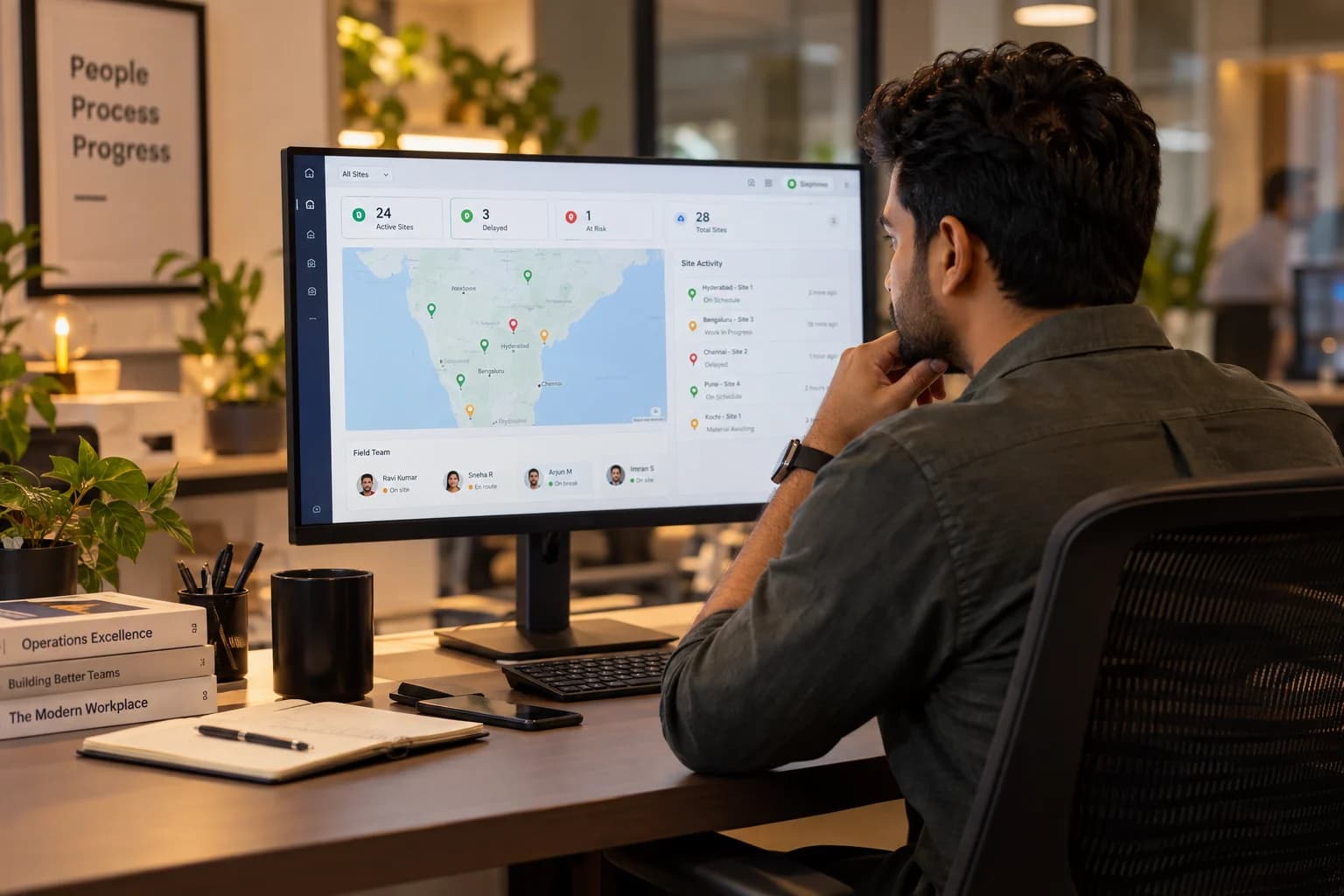
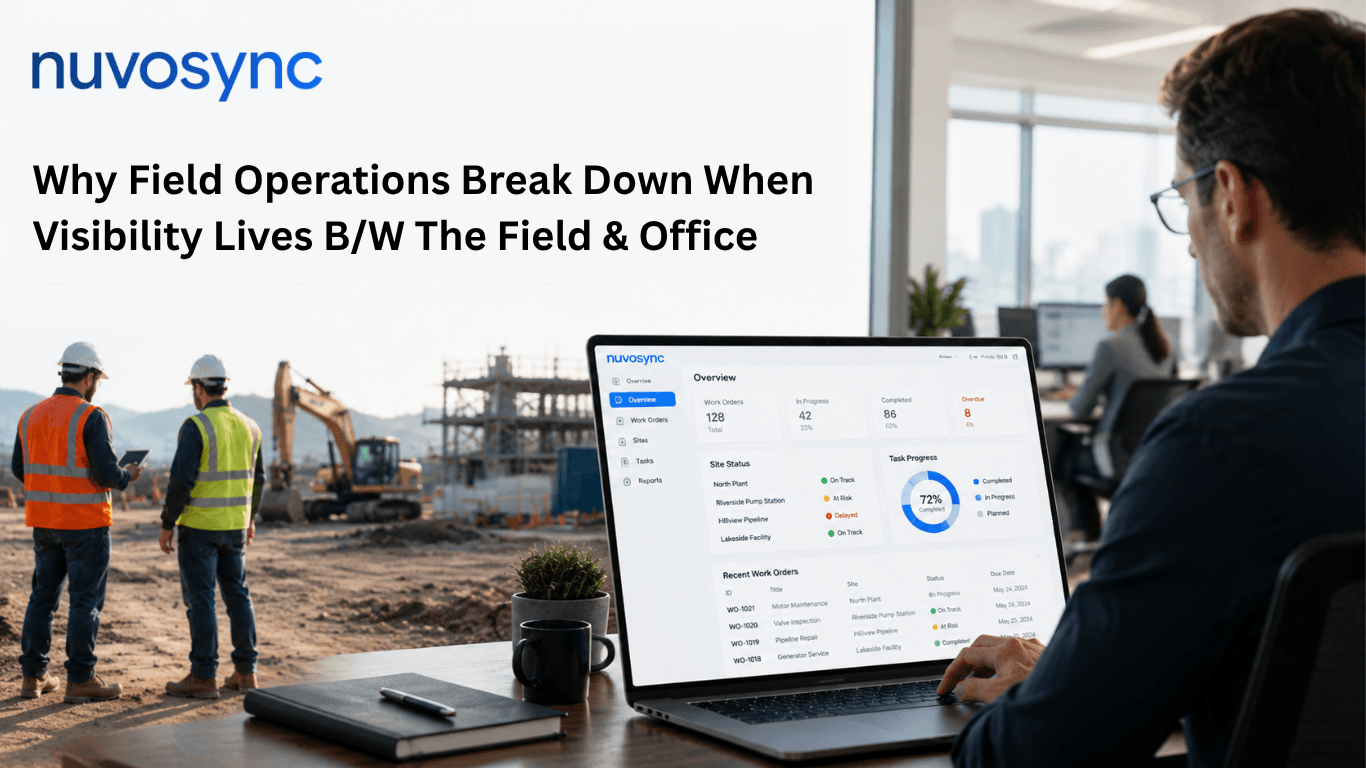
Second, it gives the operations manager a real-time view of the operation. Not a report at the end of the day. A live picture of which teams are where, which work orders are in progress, which are complete, and which have flagged issues. This picture should be available at any point in the day without asking anyone.
Third, it creates a record. Every assignment, every status update, every completion, every flagged issue is documented. This record is searchable and accessible to anyone who needs it. It is not dependent on any single person's memory or their continued presence in the organization.
What Does Not Matter as Much as Software Companies Think
The operations manager does not need a complex analytics dashboard. Detailed breakdowns of field team performance by time of day are not the priority. Neither are integrations with 30 other enterprise systems, or AI-generated route optimization, or automated client reports.
These features serve organizations at a different scale and with different priorities. For the operations manager running a mid-sized field team in India, the priority is clarity. A clear view of what is happening. A clear way to assign and track work. A clear record of what was done.
Complexity is not a feature. It is a risk. Every additional layer of functionality that field staff have to learn and use is a potential point of non-adoption. The software that gets used consistently is the software that does the essential job without making the essential job harder.
How NuvoSync Approaches the Operations Manager's Needs
NuvoSync is designed from the operations manager's perspective outward. The core workflow is built around three questions that every operations manager is asking every day: What has been assigned? What is happening right now? What was completed and what is still outstanding?
The field team experience is built for the same simplicity. An assigned work order is visible on the field team member's phone. Status updates take seconds, not minutes. Issues can be flagged without composing a message or making a call.
The result is a system where the manager has the picture they need and the field team has the clarity they need, without either side having to maintain a parallel communication channel to fill the gaps. The operation becomes legible. And when it is legible, it becomes manageable in a way that informal systems never quite allow.