There is a type of operational cost that does not appear on any invoice and does not show up in any monthly report. It is the cost of time spent reconstructing information that should have been available in the first place.
For businesses running distributed field operations, this cost is significant. It shows up in the hour a manager spends piecing together yesterday's site activity from three WhatsApp groups. In the follow-up call that happens because an update was sent but no one is sure if it was actioned. In the technician who is idle for 45 minutes because his next work order has not been communicated yet.
None of these moments feel like a crisis. Each one is manageable. But add them up across 20 field teams, across 250 working days a year, and you have a number worth paying attention to.
What a "Working" System Actually Looks Like
Most field operations that have been running for a few years have developed systems that work. WhatsApp groups for updates. A spreadsheet that someone maintains. A morning call to align everyone. Periodic reports that come in at the end of the week.
This is not a broken system. It is a system that worked well when the operation was smaller and the team was tighter. The problem is that it does not scale gracefully.
When you add a new location, you add a new WhatsApp group. When you add more field staff, the morning call gets longer and more people miss it. When you add a new manager, they spend weeks just learning what each spreadsheet means and who to call when something is wrong.
Growth creates coordination overhead. And in field operations, most of that overhead is invisible until something actually goes wrong.
Three Places Where the Cost Accumulates
The first is rework. When a job is completed but not confirmed in a trackable way, there is always a chance it gets assigned again, inspected again, or billed at the wrong time. Rework in field operations is not always about doing the job twice. Sometimes it is just the administrative overhead of confirming that it was done right the first time.
The second is response time. When an issue comes up at a site, the speed of the response depends on how quickly the right person gets the right information. In a system where updates travel through WhatsApp and phone calls, the information often has to pass through several people before it reaches the decision-maker. Time passes. The problem gets worse. The response comes late.
The third is management bandwidth. Operations managers in field-heavy businesses spend a disproportionate amount of their time on coordination tasks rather than strategic ones. Tracking down updates. Following up on incomplete reports. Figuring out which teams are available for new assignments. This is time that could go toward improving processes, managing client relationships, or planning the next phase of growth.
Why Adding More People Does Not Fix It
The instinctive response to coordination problems is to add people. Hire a coordinator. Add another supervisor. Get someone to manage the WhatsApp groups and update the spreadsheet.
This works temporarily. And it adds a recurring cost. More importantly, it does not fix the underlying structure. It just adds human effort to compensate for the absence of connected systems.
Every business that relies on manual coordination to hold its field operations together is also one resignation away from a serious operational disruption. When the person who holds all the context leaves, a significant part of the institutional knowledge of the operation leaves with them.
What Connected Field Operations Look Like in Practice
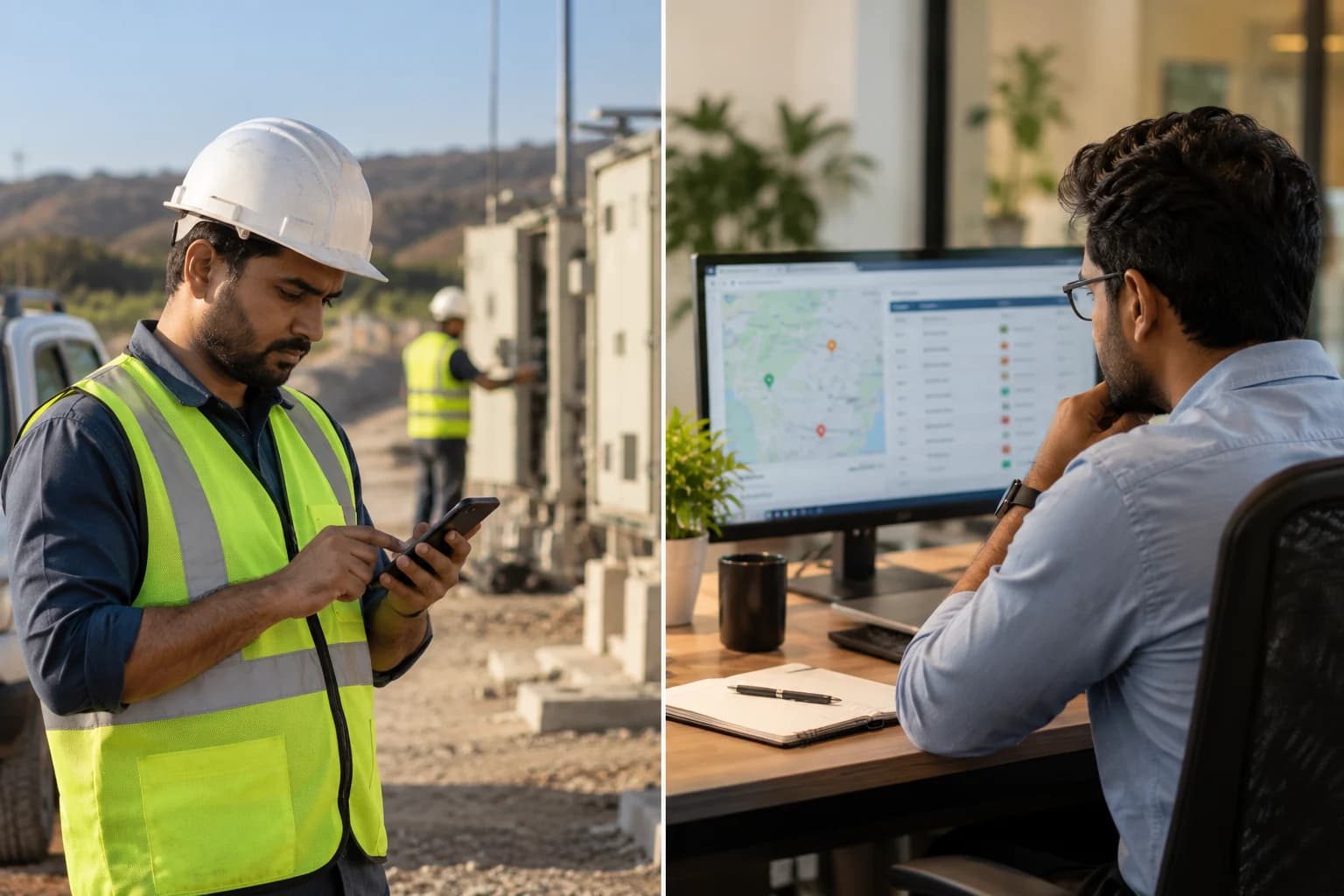
A connected field operation starts with structured work orders. Every job that goes to the field is assigned through a system, not a message. The field team member can see what they are responsible for, where they need to go, and what needs to happen when they get there.
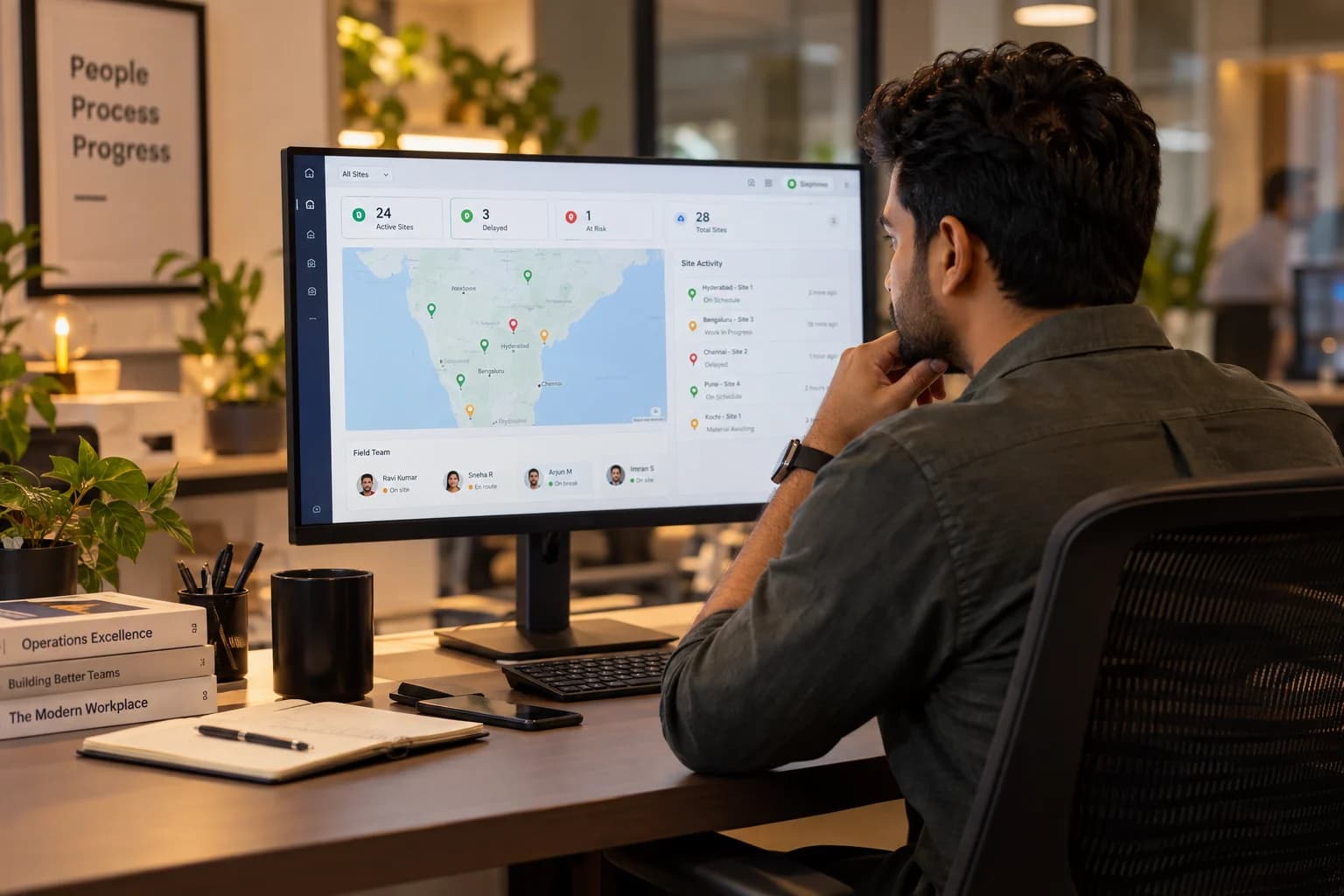
As work progresses, updates flow back through the same system. No separate reporting. No chasing people for updates. The manager watching the dashboard can see at any point which sites are in progress, which are complete, and which have flagged issues.
When the day ends, there is a record. Not a collection of chat messages and call logs, but an organized account of what was assigned, what was completed, and what is pending. That record is searchable. It can be reviewed by anyone with access. It does not depend on any single person's memory or their continued presence in the organisation.
How NuvoSync Approaches This Problem
NuvoSync is designed for operations teams that have outgrown informal systems but do not need enterprise complexity. The core workflow is straightforward. Office teams create and assign work orders. Field teams receive them, execute the work, and update status as they go. Supervisors have visibility across sites in real time.
The system is built around the idea that field and office should not be two separate information environments. What happens on site should be visible to the people who need to act on it, without any extra step of calling, messaging, or manually updating a spreadsheet.
For operations managers, this changes the quality of their mornings. Instead of starting the day with a round of calls to find out where things stand, they open the dashboard and see it. Sites that are on track. Work orders that have been started. Issues that have been flagged overnight. The day starts with information rather than information-gathering.
For field team members, the change is equally practical. Their assignments are clear and confirmed before they leave the depot. They know what they are doing and where. If something changes, it is updated in the system, not relayed through a third person.
The Business Case Is Not About Technology
When operations leaders evaluate tools like NuvoSync, the conversation sometimes gets pulled toward features and integrations. That is the wrong starting point.
The right starting point is the cost your current system is generating. Not the licensing cost of the software you are considering, but the real cost of the coordination overhead, the rework, the management time spent on information gathering rather than decision making, and the operational risk of a system held together by a few indispensable people.
When those costs are visible, the value of a connected system becomes obvious. Not because the technology is impressive, but because the problem it solves is genuinely expensive.
Field operations at scale need a system that scales with them. Manual coordination was a starting point, not a permanent solution. The businesses that recognize this early build operations that can grow without the coordination cost growing at the same rate.