
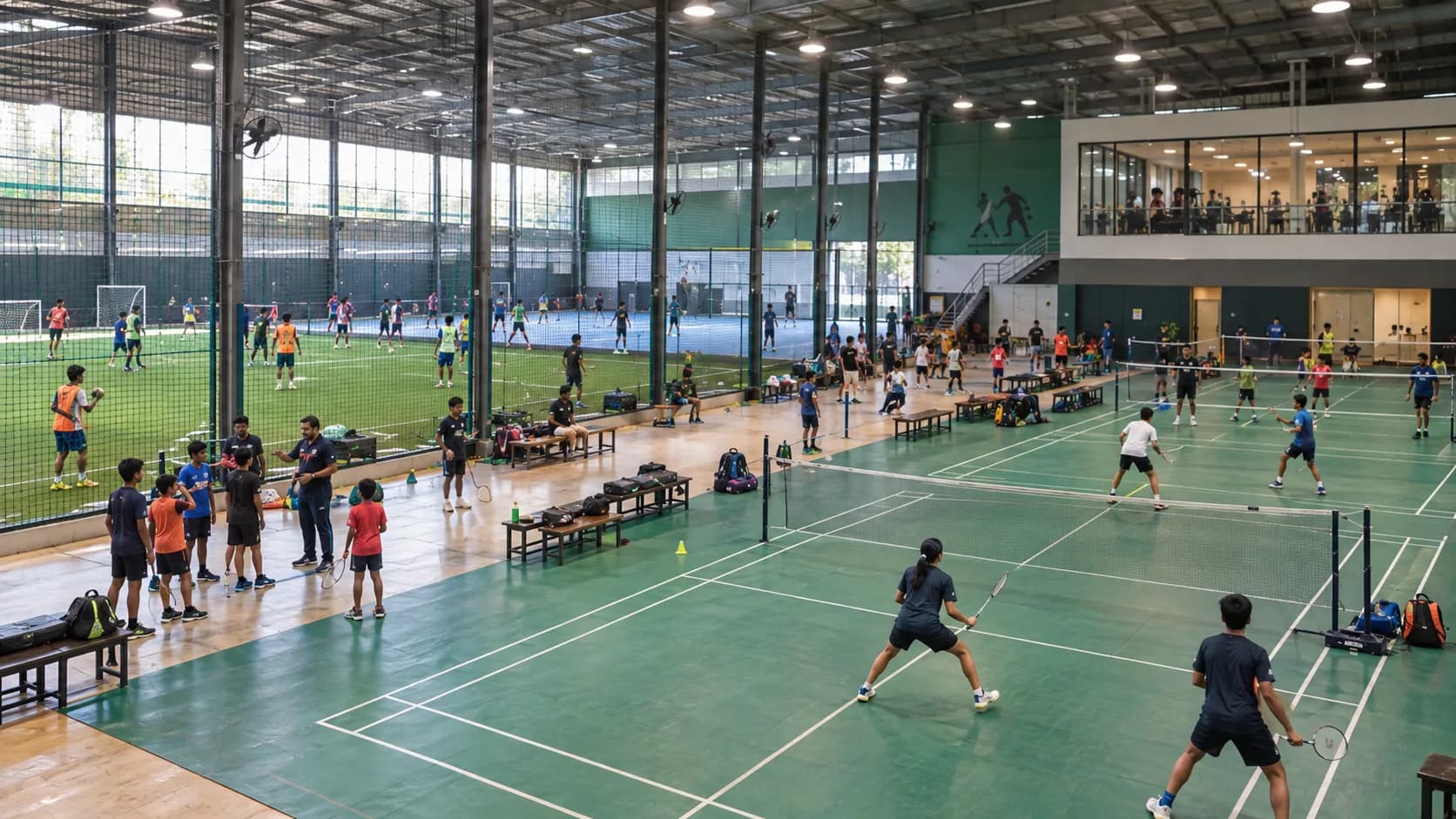
When a sports academy grows, the growth feels good. More students means more revenue, more coaches, more visibility in the community. The founder or owner who built the academy from a small batch takes the growth as validation that what they built is working.
And it is. But growth does not just multiply the success. It also multiplies the complexity. An academy that moves from 60 members to 130 in 18 months is not managing twice the work. It is managing a qualitatively different operation, and the systems that handled 60 were not designed for 130.
This is the point where a significant number of sports academies start to struggle. Not because the coaching gets worse or the facilities deteriorate, but because the operational layer that held everything together at a smaller scale begins to show cracks at a larger one.
The First Sign: The Owner's Phone
The first sign that an academy has outgrown its systems is usually visible in the owner's phone.
At 60 members, the owner knows every family. When a parent messages about a missed class or a fee query, the owner knows the context. They know the student, the batch, the coach. Replying takes seconds because the information is in their head.
At 130 members, the owner still knows most families, but the context is thinner. A message from a parent about "last week's session" requires a moment of reconstruction. Which batch is their child in? Which coach? Was there a change that week? The reply takes longer. More importantly, it takes more mental energy.
When this happens 20 or 30 times a day across different families, coaches, and operational queries, the owner's phone becomes a liability rather than a tool. It is always on. It is always demanding a response. And the quality of the responses degrades as the volume increases.
The Batch Management Breakdown
At smaller scale, batch management is informal. The owner knows which batches are full, which have room, and which need to be restructured. This knowledge lives in their head and is updated in real time as changes happen.
At larger scale, this breaks down. A coach asks if there is room in the Tuesday evening batch. The owner thinks there is. They send a new student to that batch. The coach shows up to find 18 students on a court that comfortably fits 12. Someone had joined three days ago and the owner had forgotten.
This is not a failure of memory. It is a failure of system design. No individual can reliably maintain a real-time, accurate picture of 130 students across 12 batches with varying schedules, coaches, and capacity limits. The system that relies on one person's memory will fail at some frequency. The frequency increases as the scale increases.
The Fee Collection Slide
Fee collection in a growing academy follows a predictable trajectory. At small scale, the owner knows who has paid and who has not. The occasional reminder is sent and handled. The amounts in arrears are small and visible.
As the academy grows, the fee picture becomes more complex. Students join at different points in the month. Some pay quarterly, others monthly. A few have negotiated different rates. The total receivable at any given point is not a number anyone knows without sitting down to calculate it.
The families who are slow payers are still the same families. But at 130 members, there are more of them, and the amount in arrears compounds. The owner sends reminders but cannot always track which reminders have been sent, whether they have been acknowledged, and which are waiting on a second follow-up.
The cash flow feels less predictable than it did. The owner cannot always explain why. The answer is usually that the receivables are not being tracked in a system, only in a general sense that sits somewhere between memory and a spreadsheet that is never quite current.
What a Growth-Ready Operation Looks Like
A growth-ready sports academy has separated the operational knowledge from any individual's memory. The information lives in a system that anyone authorised can access and that updates in real time as changes happen.
Batch capacity is visible in the system. When a new student is being registered and assigned to a batch, the system shows which batches have room. The decision is made on current information, not on the owner's recollection of what the picture looked like last week.
Attendance is marked by the coach at the time of the session and immediately visible to the owner. The owner does not have to ask the coach whether a particular student attended last Tuesday. They can look it up.
Fee status is visible per student and as an aggregate. The owner can see the total receivable, which families are overdue, and by how much. Reminders can be sent from the system rather than through individual messages. The follow-up process is tracked.
The Owner's Role After the System Exists
When an academy has a proper management system, the owner's role changes in a way that makes growth sustainable rather than exhausting.
They stop being the information node that every operational question passes through. They start being the decision-maker who reviews a picture that is already assembled and acts on it. The questions they answer shift from "which batch has room?" and "did you pay last month?" to "should we open a new batch on Saturday?" and "which coaches are performing best across which age groups?"
This is not a small shift. It is the difference between an owner who is consumed by the operational present and one who can think about the strategic future of their academy. It is also the difference between an academy that can grow past the owner's personal bandwidth and one that is limited by it.
How Sporte Supports Academy Growth
Sporte is built with growing academies specifically in mind. The system handles the operational layer that grows in complexity as an academy scales: student registration, batch management, attendance tracking, fee management, coach coordination, and facility utilisation reporting.
When a new student joins, they are registered in the system and assigned to a batch. The batch capacity is updated automatically. Attendance is marked by the coach on their phone and is immediately visible in the owner's dashboard. Fee dues are tracked per student and per cycle. Reminders can be managed through the platform.
The owner gains a picture of the operation that is current, accurate and accessible from anywhere. They stop depending on their memory and other people's messages to understand what is happening in their own academy.
Growth becomes something an academy can absorb rather than something it struggles to contain. That is not a small thing for a business where the owner has put significant time, money and personal investment into building something worth growing.