Most venues take bookings from a mix of places. A marketplace listing, Instagram messages, phone calls, walk-ins. What many of them don't have is one page of their own where a customer can see the venue, check what's free and book.
That gap usually goes unnoticed until something changes. A platform updates its terms, a competitor down the road gets a better listing, or a regular customer simply can't remember where they booked last time. It's in those moments that owners realise how much of the customer relationship they never actually held.
What "owning" your booking channel means
It comes down to three things.
Your own address and brand. A website on your own domain, with your name, your colours and your photos, not a small tile inside someone else's app.
Your own customer records. Names, phone numbers, booking history and preferences sitting in a system you control, not in a report you request.
Your own payment flow. Customers pay through your page, and the money goes where you expect it to. When you evaluate any tool, ask exactly how payments are routed and who settles them.
Why it matters more than it seems
You know who your customers are. When you can see who plays, how often and at what hours, you can message the Tuesday-evening regulars about a new batch or offer a discount to fill a slow weekday morning. Without records, every customer is anonymous each time they book.
Customers remember the venue, not the platform. Someone who books through your own page associates the experience with you. That's what brings them back and what they recommend to friends.
You depend less on any one channel. Depending on the platform, bookings can come with commissions, fees or changing rules. A direct channel gives you a base that doesn't move when someone else's terms do.
Your data shows you how to run the business. Booking history reveals your peak hours, your quiet slots, your repeat groups and which sport is growing. That's the raw material for pricing and scheduling decisions.
You keep your customers if anything changes. If you switch tools or a listing disappears, a customer list you own comes with you.
Does this mean leaving marketplaces?
No. Marketplaces are good at discovery, and plenty of venues keep a listing for exactly that. The practical approach is to treat them as a way to meet new customers and your own page as where repeat customers book. Put the link in your Instagram bio, on a QR code at the counter, in your WhatsApp status and on your Google Business Profile. Every time a customer books directly, they're one step closer to being yours rather than the platform's.
What a good venue booking website needs
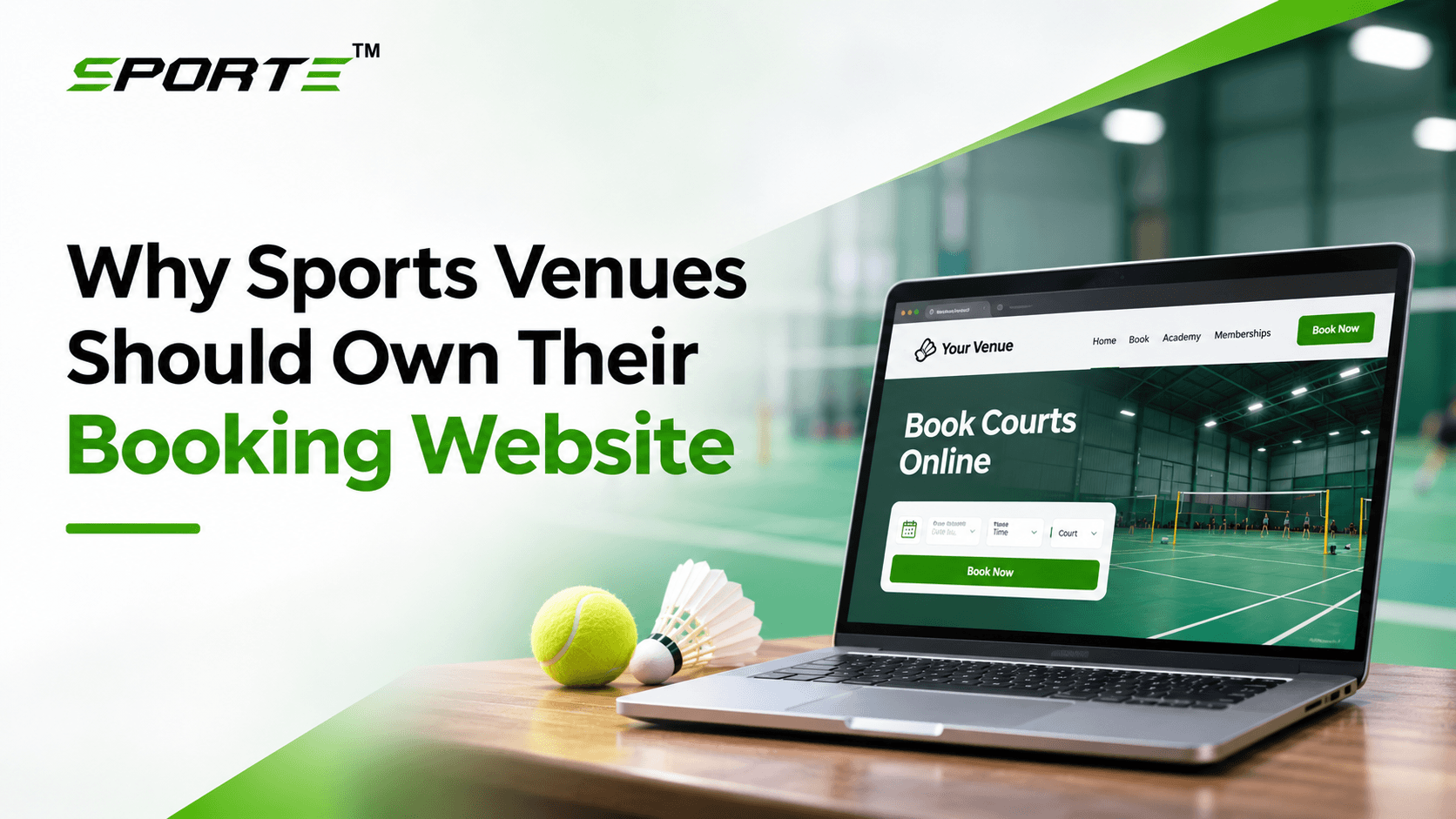
Your sports, courts and slots, with timings and pricing you control.
Live availability and online booking that blocks the slot immediately.
Payment at the time of booking.
Clear photos, location, contact details and opening hours.
A layout that works well on a phone, since most bookings happen there.
A custom domain, so the address reflects your venue.
Easy updates by your own staff, without calling a developer.
Using customer data well
Owning data is only useful if you use it sensibly. Start with the basics: name, phone number, booking history and the sports each customer plays. Use that to send reminders, announce tournaments, offer slow-hour deals and reach out to people who haven't booked in a while. Collect only what you need, be open about how you'll use it and handle it in line with the data protection rules that apply in India.
How SportE fits
SportE is the sports venue and academy management platform we build at Weblabs. It gives each facility a white-label booking website with its own branding and custom domain, sports and court listings, an online booking journey, a central customer database with booking history, and payment gateway integration through Razorpay. The idea behind it is simple: the venue should run under its own name and keep its own customer relationships. You can see the platform at sporte.in.
Frequently asked questions
Do I need technical skills to run my own booking website? No. A good platform handles the hosting and setup. Your job is to add your sports, courts, slots and pricing and keep them current.
Will I lose bookings if I stop depending on marketplaces? Not necessarily. Many venues keep their marketplace listings for discovery and add a direct booking page for repeat customers. Over time, more of those bookings come through the channel you own.